When you hear "Robusta," what comes to mind? For a long time, it was the coffee world's underdog—the stuff you'd find in cheap instant coffee or as a filler bean, known more for a harsh, rubbery taste than anything else. But that's all changing. The best coffee robusta brands today are rewriting the script, focusing on high-quality, single-origin beans and modern processing to deliver a cup that’s bold and smooth, not bitter.
Brands like Cartograph Coffee are at the forefront, proving that premium Robusta can offer that intense caffeine kick you crave without any of the unpleasantness of its past.
Why Coffee Robusta Brands Are Gaining Attention
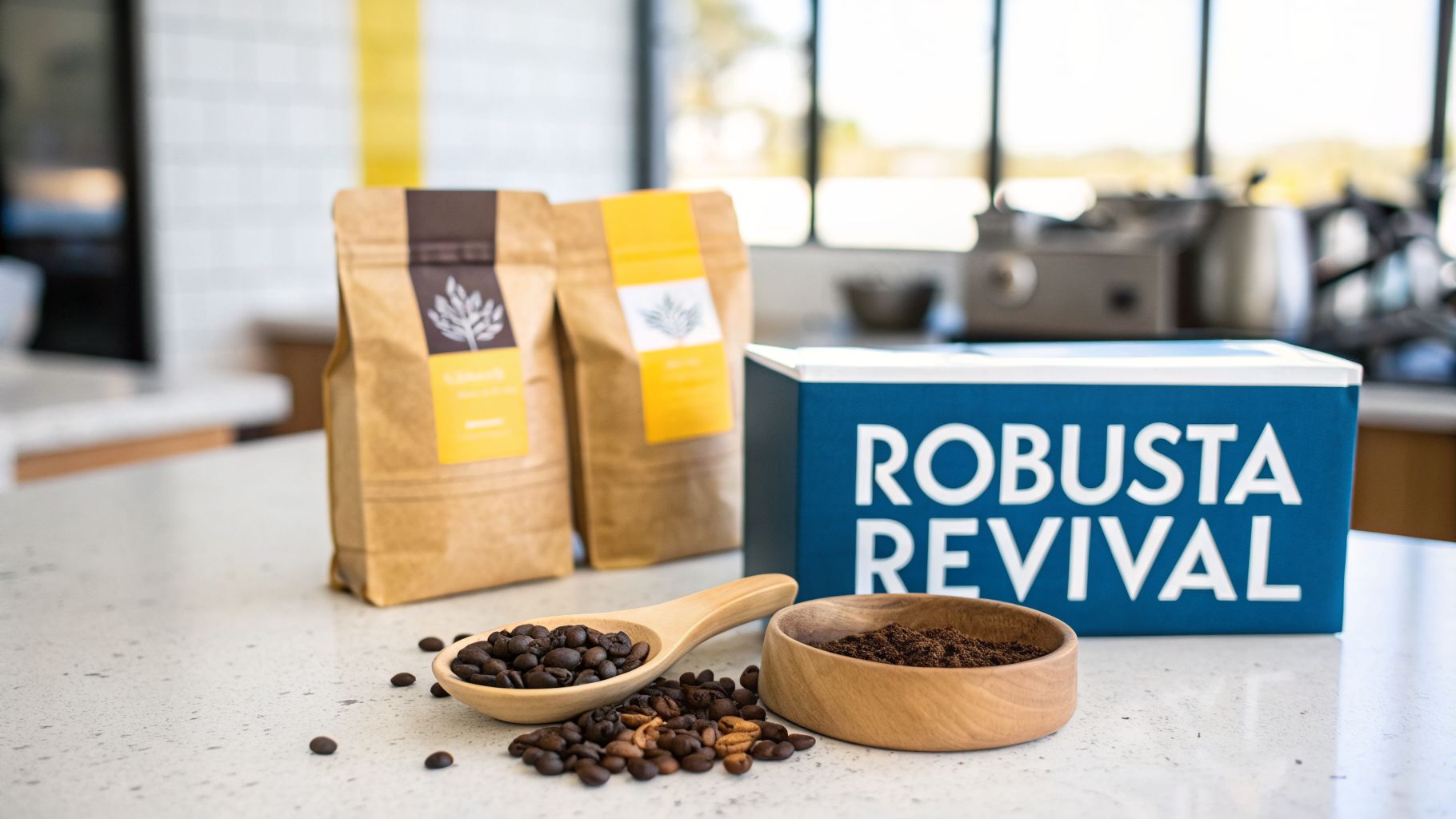
For decades, Robusta got a bad rap, completely overshadowed by its more famous cousin, Arabica. It was seen as a cheap commodity, not a specialty coffee. But a real revival is happening. Coffee lovers and forward-thinking brands are giving Robusta a second look, and they’re discovering its incredible potential.
This isn't just a niche trend. The numbers tell the story. The global market for Robusta coffee beans was valued at USD 18.16 billion back in 2022, and it’s projected to hit USD 28.73 billion by 2030. That’s a massive jump, reflecting a real shift in what people want from their coffee. You can dig into the data and learn more about the global Robusta coffee market.
So, what's driving this comeback? It boils down to three key things that perfectly match what modern coffee drinkers are looking for:
- Powerful Flavor: We're not talking about that old burnt-rubber taste. High-quality Robusta has a deep, bold profile with rich notes of dark chocolate and nuts. It’s for people who genuinely enjoy a strong, unapologetic cup.
- Rich Crema: If you’re an espresso fan, this is huge. Robusta is famous for producing a thick, stable, and beautiful crema—that golden-brown foam on top of an espresso shot. It's the secret ingredient for that authentic Italian espresso experience.
- High Caffeine Content: Let's be honest, many of us drink coffee for the energy. Robusta naturally packs nearly twice the caffeine of Arabica, delivering a clean, powerful boost to start your day or get you through an afternoon slump.
The Brand Makes the Difference
Here’s the most important thing to remember: not all Robusta is the same. The difference between a bitter, forgettable cup and a smooth, powerful one comes down to the brand behind the bean. The best coffee robusta brands are obsessed with sourcing and processing, carefully selecting their beans to unlock their true, delicious potential.
As Robusta finds its way into more specialty cafes, understanding how these businesses build buzz is fascinating. For instance, exploring strategies like influencer marketing for coffee shops and cafes shows just how brands are getting the word out and changing minds.
At Cartograph Coffee, we’re all in on this new chapter for Robusta. We specifically source specialty-grade, organic beans to create an instant coffee that’s flavorful, convenient, and incredibly high-quality. We believe the right Robusta can completely change your mind about what coffee can be.
Let's get one thing straight: Robusta has had a serious PR problem for decades. If you've ever heard it dismissed as Arabica's bitter, less-refined cousin, you're not alone. But that reputation is built on a misunderstanding of what this incredible coffee bean is capable of.
I like to think of it this way: Arabica is like a finely-tuned sports car. It's known for its delicate, complex flavors—bright, floral, and fruity notes. It’s a thing of beauty, but it's also temperamental, needing perfect high-altitude conditions to even survive.
Robusta is the trusty 4x4 of the coffee world. Its scientific name, Coffea canephora, even hints at its ruggedness. This is a tough, resilient plant that thrives in hotter climates and lower altitudes, making it far hardier and easier to grow. And that very toughness is what forges its unique character.
From Hardy Bean to Bold Flavor
That resilience isn't just for show—it directly shapes what you taste in the cup. Where many Arabicas are high-acid, Robusta offers a powerful, low-acid experience with a deep, earthy foundation. You can expect to find rich notes of dark chocolate, toasted nuts, and a full-bodied mouthfeel that sticks around.
This bold profile makes it an incredible foundation for drinks where you need the coffee flavor to cut through milk and sugar. We dive deeper into how the two coffee giants compare in our guide to Robusta vs Arabica coffee beans.
And of course, there's the caffeine.
A typical Robusta bean contains nearly twice the amount of caffeine as an Arabica bean. This isn’t just to give you a bigger kick; caffeine acts as a natural pest repellent, which is a key reason the plant is so resilient in the first place.
So, where did the "bitter and rubbery" myth come from? For a long time, Robusta was treated as a bulk commodity. The focus was on quantity, not quality. Beans were often harvested poorly and roasted incredibly dark to mask any defects, which completely obliterated any nuanced flavor and created that harsh taste so many of us learned to avoid.
Thankfully, a new generation of growers is completely changing the game with what's now known as "fine Robusta."
The Rise of Fine Robusta
These days, producers are giving Robusta the same careful attention that was once reserved only for specialty Arabica, and the results are stunning. By focusing on superior farming, harvesting, and processing, they're showing the world that Robusta can be both powerful and exceptionally smooth.
Here’s what that looks like in practice:
- Smarter Farming: Growers are now selectively picking only the ripest coffee cherries, just like with high-end Arabica.
- Modern Processing: Innovative methods like honey or natural processing are being used to reduce bitterness and develop wonderfully sweet, complex flavors.
- Artisanal Roasting: Skilled roasters are using lighter profiles to highlight Robusta’s inherent chocolate and nutty notes instead of burning them away.
This new focus on quality means the best coffee robusta brands on the market today are offering a product that's a world apart from the commodity beans of the past. They're proving that when given the respect it deserves, Robusta delivers a deeply satisfying and uniquely powerful coffee experience.
How to Identify High-Quality Coffee Robusta Brands
Sorting through the world of coffee robusta brands can feel like a real challenge. For years, Robusta got a bad rap for being harsh and bitter. Now, with "fine Robusta" making a name for itself, how do you actually spot the good stuff? The secret isn't in the fancy packaging—it’s in knowing what questions to ask about the beans themselves.
Think of it like buying a good bottle of wine. You wouldn't just grab any red off the shelf; you'd look at the region, the grape, even the year. The same logic applies to coffee. If you know what to look for in four key areas—sourcing, roast, processing, and certifications—you'll be able to pick out an amazing Robusta every time.
Sourcing and Origin
Where a coffee bean comes from tells you so much about how it will taste. This idea, called terroir, is all about the unique combination of soil, climate, and elevation of a specific place. For example, a Robusta from Vietnam (the world's top producer) will likely give you that classic, bold, and earthy flavor. But a bean from Uganda might completely surprise you with notes of fruit or even wine.
The best brands are always upfront about their sourcing. They'll proudly tell you the country of origin, and often the exact farm or cooperative where the beans were grown. This is a huge clue that they’re not just scooping from a massive pile of commodity-grade beans, but are carefully selecting them for a specific taste experience.
Pro Tip: Keep an eye out for brands offering "single-origin" Robusta. This means every bean in that bag came from one specific area, giving you an unfiltered taste of that region's unique character.
Roast Level and Flavor Profile
Roasting is the magic that turns a raw, green coffee bean into the aromatic gem we know and love. A roaster's touch is everything; they can either coax out the bean's best qualities or completely burn them away. With Robusta, the roast is especially critical for taming its natural intensity.
- Medium Roast: This is really the sweet spot for a lot of modern, fine Robustas. It dials back the raw power just enough to let the bean's natural chocolate and nutty notes shine, creating a cup that's smooth, balanced, and still satisfyingly strong.
- Dark Roast: This is the traditional go-to, especially for espresso blends. A skillful dark roast can produce an incredibly powerful, low-acid coffee with a rich, syrupy body—the heart of a classic Italian-style brew.
Lesser brands often over-roast their beans to a dark, oily finish to hide the flaws of low-quality coffee. In sharp contrast, premium coffee robusta brands use the roast to celebrate the bean's flavor, not disguise it.
Processing Method
After the coffee cherries are harvested, the fruit has to be removed from the bean inside before it's dried. How this is done, known as the processing method, dramatically changes the final flavor.
The two main methods you’ll see are:
- Washed Process: Here, the fruit is scrubbed off the bean completely before it's laid out to dry. This method is all about clarity, producing a clean and crisp flavor that really lets the bean's natural origin character come through.
- Natural Process: With this method, the entire coffee cherry is dried with the fruit still on the bean. The bean soaks up all those sugars as it dries, which often leads to a sweeter, fruitier taste, a heavier body, and sometimes even wine-like complexity.
When a brand bothers to tell you how their coffee was processed, it's another great sign they care about the details.
Certifications and Ethical Standards
Finally, don't overlook the labels on the bag. Certifications can tell you a lot about a brand's philosophy and commitment to quality. While they aren't the only thing that matters, stamps like Organic and Fair Trade are valuable guides. An Organic seal means the coffee was grown without synthetic pesticides or fertilizers, which is better for the environment and often results in a better-tasting bean. Fair Trade certification tells you that the farmers were paid a fair, sustainable price for their hard work.
By looking at coffee robusta brands through these four lenses, you can move past the marketing hype and confidently choose a coffee that truly delivers on both flavor and integrity.
How to Use Robusta to Make Better Coffee
So, we've covered the theory behind what makes a great Robusta bean. But where does the rubber really meet the road? It’s one thing to talk about origins and processing, but it's another to see how a top-shelf Robusta can completely transform your daily cup.
Let's look at two places where high-quality Robusta isn't just an ingredient, but a game-changer: traditional espresso and the new wave of instant coffee.
The Secret to Italian-Style Espresso
There’s a reason Italian espresso culture has embraced Robusta for decades. It’s the secret weapon behind that perfect, café-quality shot you’re chasing.
You know that thick, reddish-brown foam that sits on top of a fresh espresso? That’s the crema, and it’s largely Robusta’s handiwork. Because it has a different oil and sugar composition than Arabica, Robusta helps create a dense, stable foam that gives espresso its signature velvety mouthfeel. It’s not just for looks; it’s texture.
But it goes deeper than that. Robusta’s bold, low-acid flavor profile provides the powerful backbone that great espresso needs. It's what allows the coffee’s character to punch right through the milk in a latte or cappuccino. Without it, you’re often left with a drink that just tastes like warm, milky coffee-flavored water.
The New Engine of Quality Instant Coffee
Now, let's be honest: instant coffee has a bit of a reputation problem. For years, it was a race to the bottom, made with the cheapest commodity beans available. The result was a product known for convenience but dreaded for its harsh, often rubbery taste.
Thankfully, premium coffee robusta brands are rewriting that story entirely.
The quality of the final product all comes back to the quality of the bean. You can't make great instant coffee from bad raw material. The choices made at every step—from the farm to the roaster—are what separate the good from the bad.
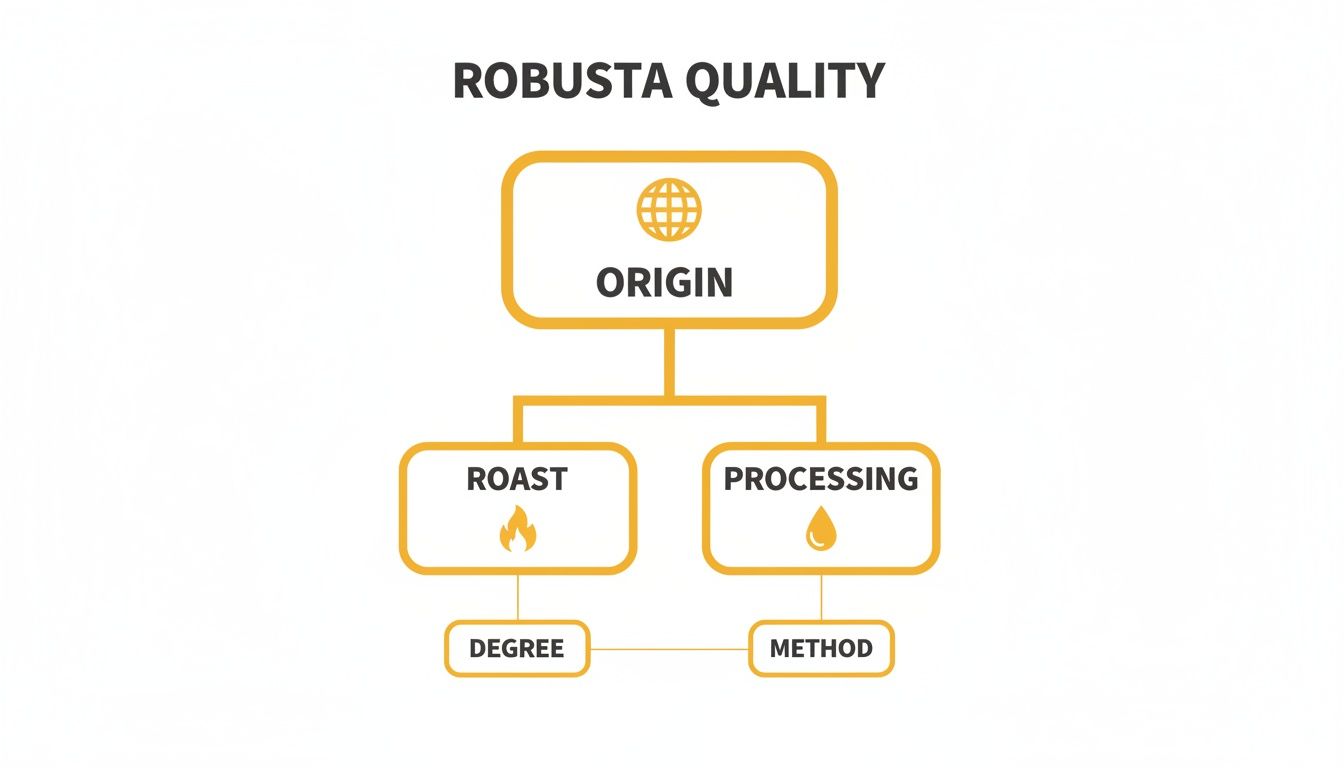
This is precisely where Robusta shines. Its natural characteristics—a strong, bold flavor and high solubility—make it the perfect candidate for crafting an instant coffee that actually tastes good. When you start with a great bean, its deep, chocolatey notes hold up beautifully through the freeze-drying process, unlike lesser beans that lose all their character.
This is exactly why we built Cartograph Coffee around specialty-grade, organic Robusta. We saw its potential to create an instant coffee that finally shatters those old stereotypes. Our goal is to deliver that powerful flavor and caffeine kick you want, but with a smoothness and quality that proves convenience doesn't have to mean compromise.
And it seems people are catching on. Instant coffee is the industry's fastest-growing segment, projected to expand at a 7.52% CAGR through 2031. As more people demand better coffee that fits a busy lifestyle, quality Robusta is becoming the foundation of this movement. You can explore more data on the rapidly expanding instant coffee market to see just how big this shift is.
Exploring Top Robusta Regions and Their Flavors
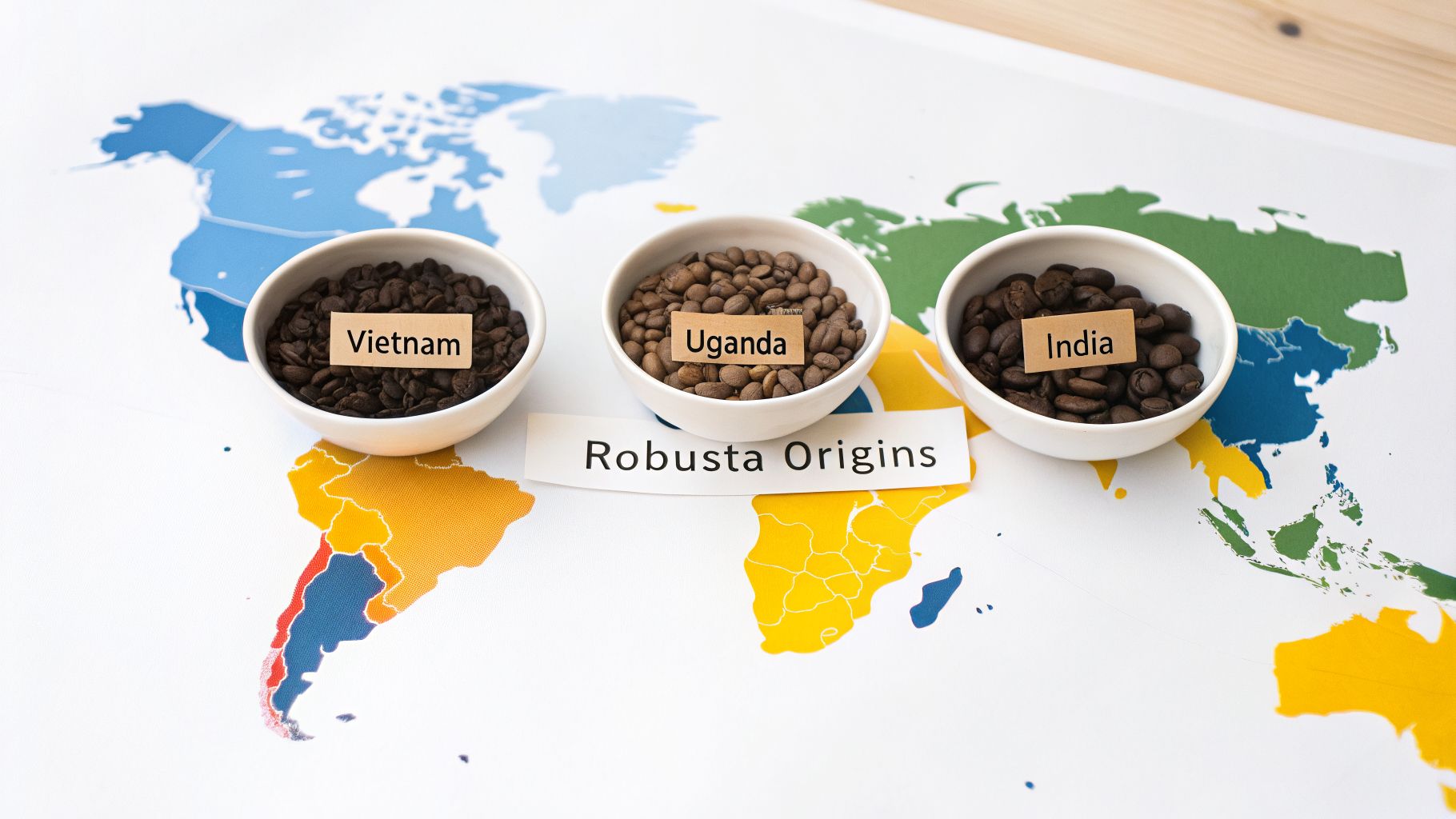
To really get a handle on coffee robusta brands, you first have to understand where the beans are grown. Just like with wine grapes, a coffee’s origin—its unique combination of soil, climate, and altitude—lays the foundation for its flavor. Think of it as a bean's regional accent; a coffee from Vietnam will speak a completely different language than one from Uganda.
By getting to know the major players, you can start to connect specific tastes to their source. This insight is your roadmap for navigating the coffee aisle, helping you find a Robusta profile that truly hits the spot. Let's take a quick trip to the world's top Robusta-producing countries.
Vietnam: The Robusta Powerhouse
When you think of Robusta, your first thought should be Vietnam. As the world's biggest producer, Vietnam essentially defines the classic Robusta flavor: bold, earthy, and packing a serious caffeine punch. It's the ultimate workhorse bean.
This profile makes Vietnamese Robusta the go-to for major international brands, particularly for instant coffee and espresso blends that need a strong, reliable base. The taste is often characterized by notes of dark chocolate and toasted nuts, creating that deeply familiar and satisfying kick many of us expect from our morning coffee. Its sheer consistency and power are what have made it a global staple.
Uganda: The Fruit-Forward Surprise
Next, we hop over to Uganda, where a totally different style of Robusta is making a name for itself. Often called 'drugars,' Ugandan beans can completely flip your perception of what Robusta can be. While they still have that signature boldness, they frequently come with surprising and delightful fruity or even wine-like notes.
This unique complexity is a direct result of the region's specific growing conditions and evolving processing techniques. A well-sourced Ugandan Robusta offers a much more nuanced cup, making it a new favorite for specialty roasters seeking a Robusta with a bit more personality. To dig deeper into how a single location shapes taste, check out our guide on what is single origin coffee.
Europe’s coffee habits have a huge impact on the global Robusta market. Italy, with its deep-seated espresso culture, is a massive consumer, importing 133,000 tonnes from Vietnam, 38,000 tonnes from Uganda, and 8,000 tonnes from Indonesia to pull that perfect, crema-topped shot. Learn more about Europe's Robusta coffee demand.
India: The Smooth Monsoon Malabar
Finally, our journey takes us to India, home to one of the most fascinating processing methods in the coffee world: Monsooned Malabar. This isn't about where it's grown, but how it's treated. After harvesting, the beans are exposed to moisture-rich monsoon winds for several months.
This unique aging process makes the beans swell up and shed most of their natural acidity. The result is an incredibly smooth, full-bodied, and mellow coffee. Its flavor is often described as earthy and woody with hints of spice, and its nearly neutral pH makes it exceptionally gentle on the stomach.
Your Guide to Buying and Brewing Better Robusta
Alright, now that you know what makes Robusta tick, it's time for the fun part: bringing it into your own kitchen. Getting a great cup of Robusta at home is far easier than you might imagine. It really just boils down to picking the right coffee and using a brewing method that plays to its natural strengths.
Let's walk through how to navigate the coffee aisle and your countertop, so you can lock in a delicious, powerful cup every single time. This is how you'll find the best coffee robusta brands for your taste.
Smart Buying Tips for Quality Robusta
The journey to a better brew starts with choosing the right beans. When you're standing in front of the shelf, these three checkpoints will be your north star, helping you cut through the marketing fluff and spot the real deal.
-
Look for 100% Robusta: If you’re after that authentic, bold experience, you need to make sure the bag says 100% Robusta. This is your guarantee that you’re getting the pure, unadulterated character of the bean, not something diluted in a blend.
-
Check the Roast Date: Freshness is non-negotiable in coffee. A bag with a recent roast date means all those wonderful oils and flavors are still at their peak. If there's no date on the bag, it's best to walk away—it’s likely been sitting for months, going stale and losing everything that makes it special.
-
Demand Transparency: Good coffee producers are proud of their work and want to tell you about it. Look for details about the country of origin, and even better, the specific region or farm. This level of transparency isn't just a nice-to-have; it's a huge indicator of quality sourcing.
Brewing Robusta to Perfection at Home
Once you’ve got a great bag of beans, it’s time to brew. Robusta's bold nature and low acidity really come alive with brewing methods that embrace its intensity, rather than try to tame it. You can technically use any brewer you like, but some just feel made for it.
Brewing Robusta is about leaning into its strengths. Think of it like cooking a steak—you want to use high heat to get a great sear. Similarly, methods that use pressure or full immersion bring out Robusta's deep, rich body and amazing crema.
For instance, a classic Moka pot or an AeroPress is perfect for creating a concentrated, espresso-like shot that puts Robusta's richness on full display. Of course, if you have an espresso machine, you're in for a treat. This is where Robusta truly shines, producing that famously thick, stable crema that coffee lovers dream about. If you want to dive deeper, you might enjoy our guide on the best coffee brewing methods for all types of beans.
For those days when you need that powerful flavor and kick without the fuss, Cartograph Coffee has you covered. Our organic instant coffee is made from specialty-grade Robusta, giving you that bold taste and caffeine boost you’re looking for in a format that couldn't be simpler.
Got Questions About Robusta Coffee? Let's Talk.
It's natural to have a few questions after diving into the world of Robusta. A lot of what people think they know is based on old myths. Let's clear the air and tackle some of the most common questions I hear.
Is Robusta Coffee Just a Lower-Quality Version of Arabica?
Absolutely not, though I can see why people think that. For years, the market was flooded with cheap, commodity-grade Robusta used as filler. But that's only one side of the story.
Fine Robusta is a completely different beast. These are beans grown and processed with the same level of care you'd expect from specialty Arabica. The best coffee robusta brands are meticulous, focusing on single-origin beans and specific processing to pull out incredible flavors. When it's done right, a great Robusta can easily stand shoulder-to-shoulder with a quality Arabica.
Will Robusta Coffee Always Taste Bitter?
This is the biggest myth of all. That harsh, rubbery bitterness people complain about isn't a feature of Robusta—it's a sign of low-quality beans that have been roasted way too dark to cover up defects.
A well-grown, properly roasted Robusta has a bold, rich profile with notes of dark chocolate and toasted nuts. Any bitterness is the pleasant, satisfying kind you'd find in a square of high-cacao chocolate, not a burnt or astringent taste.
What's the Best Way to Brew Robusta at Home?
Robusta's bold character and amazing ability to produce a thick, stable crema make it a natural fit for certain brewing styles. If you want to make it shine, here’s what I recommend:
- Espresso Machines & Moka Pots: The pressure here is your friend. It extracts all that rich body and highlights Robusta's signature crema for a powerful, classic Italian-style coffee.
- AeroPress: This is my go-to for versatility. It gives you a full-bodied cup that’s clean and smooth, letting you experience Robusta's depth without any risk of over-extraction.
- High-Quality Instant: Don't sleep on this one. For pure convenience, a premium instant made from 100% Robusta gives you that powerful flavor and caffeine boost with zero fuss. It’s a fantastic way to enjoy quality Robusta without buying any new gear.
Ready to see for yourself how incredible a top-tier Robusta can be? Cartograph Coffee uses specialty-grade, organic beans for an instant coffee that flips every old stereotype on its head. It’s the easiest way to get that rich, bold flavor you're looking for.